Why Great Danes Like to Watch Birds Especially Spicey Pumpkin
Look, I’m gonna level with you about why I watch birds. It’s not complicated, but humans always want to make it weird.
So I’ve got these eyes that can see 270 degrees around me, which is honestly pretty sick. Every time a bird moves out there, my brain’s like “ALERT! ALERT! SMALL THING MOVING!” I can’t help it. It’s like when you hear your phone buzz, and you have to check it even though it’s probably just your mom.
Here’s the thing: my great-great-great-whatever grandparents used to hunt wild boars. Actual boars. Big, scary ones. And now here I am, getting excited about a sparrow that weighs like two ounces. It’s embarrassing when you think about it. But the software’s still running, you know? My brain doesn’t know the difference between a boar and a bird. Movement is movement.
Plus, and I’m being honest here, what else am I supposed to do all day? You’re at work. The cat’s ignoring me. I already sniffed everything in the house twice. Watching birds is free entertainment, and it keeps me from eating the couch cushions. Again.
So yeah, that’s why I stare out the window. It’s basically Netflix for dogs, except all the shows are about birds who don’t even know they’re on TV.
The Predatory Instincts Behind Your Great Dane’s Bird Fascination
Listen, I know what you humans think when you see me lock onto a sparrow like I’m tracking a criminal. “Oh, Yeti’s being silly again.” But you don’t understand, this isn’t a choice I’m making.
Somewhere deep in my Great Dane brain, there’s this ancient instruction manual that keeps popping up uninvited. My ancestors were out there, actually hunting stuff, being all useful and impressive. Me? I slipped on the kitchen floor this morning trying to get a better look at my own tail.
But when that pigeon lands on the fence? That manual opens right up.
It’s like when you’re trying to ignore your phone, but you hear a notification. The bird does anything, hops literally, flutters, exists, and my whole system lights up. I’m not planning to catch it. I couldn’t see it if it walked directly into my mouth. I’m 150 pounds of awkward with legs that don’t always agree on which direction we’re going.
But there I’m anyway, completely frozen, staring at a three-ounce bird like it’s the most important thing that’s ever happened. My brain’s running very old software that doesn’t quite work with my current situation. Great Danes exhibit adaptive intelligence as they respond to environmental cues, and this bird-watching behavior showcases that instinctive response.
I look dignified doing it, though, so that’s something.
How a Great Dane’s Vision Makes Birds Irresistible to Watch
My eyes are basically superhero equipment that I can’t turn off, which explains why I’m staring at that sparrow like it’s the season finale of my favorite show.
I’ve got this crazy wide peripheral vision that picks up every little flutter and hop while you humans are just looking straight ahead like you’re wearing blinders. It’s not my fault, my brain is wired to spot movement like it’s my full-time job, which I guess it is.
And here’s the thing about colors: I see them differently than you do. That red cardinal sitting in the green bush? To me, it’s standing out like someone wearing a tuxedo to gym class.
My motion-detector eyes are always running in the background, so when that bird moves, it’s like someone just turned on a TV that only I can see. I’m not being dramatic about the birds. They’re just actually that interesting to someone with my particular eye setup.
It’s science, not obsession. Mostly.
Wide Peripheral Vision Range
Wide Peripheral Vision Range
My eyes sit on the sides of my massive head, giving me a peripheral vision of about 270 degrees, compared to your sad little 180. This means I notice that sparrow three seconds before you even think about looking up.
Sorry, but those are just the facts.
My peripheral awareness turns every backyard into a live nature documentary. Birds dart left, birds dart right. I catch it all without moving my enormous noggin. You’re over there swiveling your whole body around like a security camera. It’s honestly kind of embarrassing for you.
This visual thing explains why I seem transfixed by an activity you can’t even detect. A finch lands forty feet away at a weird angle, and suddenly, I go from couch potato to a statue of intense concentration. I’m not ignoring you. I’m just watching something more interesting.
Which, to be fair, happens a lot.
You’ll be calling my name like “Yeti, Yeti, come here boy,” and I’m thinking, “Buddy, a squirrel is doing a dance on the fence. We can talk about your feelings later.”
Motion Detection Sensitivity
Because my eyes evolved to track prey across open landscapes, even the tiniest flutter triggers something primal in my brain.
My motion detection skills are honestly ridiculous. A bird twitches its wing from like fifty yards away, and boom—that’s all I can think about now. My head turns. My whole body goes stiff. I’m basically a furry statue with really interested eyeballs.
This whole thing comes from special cells in my retina that are specifically designed to notice movement. Birds are pretty much just flying motion detector tests, and let me tell you, I fail every time. They hop around. They dart here and there. They do that weird little head-bob thing that makes no sense.
I physically can’t look away.
Scientists have this fancy term for it, prey drive. I call it what I do on Tuesday afternoons.
Eventually, the bird flies off. I go back to my nap. Five minutes later, another bird shows up and flutters. The whole thing starts over again. It’s been like this for three years.
Color Perception Differences
Why do birds fascinate me when I can’t even see them the way you do?
My color vision isn’t exactly impressive. I see the world in blues and yellows, mostly. Reds look brownish. Greens are confusing. Yet here I am, all 150 pounds of me, glued to the window like it’s showing the season finale of something good, watching sparrows.
Here’s what my canine perception actually picks up:
- Blue jays pop against brown fences like neon signs at a gas station
- Yellow finches practically glow in my visual range; they’re like tiny highlighters with wings
- Movement matters more than color anyway, and these things move *constantly*
You assume I’m missing out. I’m not. My limited palette means birds wearing blue or yellow become the most interesting things in the yard. Everything else fades to background noise. It’s like someone took the whole outside and dimmed everything except the good stuff.
I don’t need your rainbow. I’ve got mine. And honestly? Fewer colors means fewer decisions. You, humans, act like seeing a million colors is great, but then you spend twenty minutes picking out a shirt.
I wake up, see blue and yellow birds, and my whole day is made. Simple.
The Mental Stimulation Birds Provide for Your Great Dane
Birds aren’t just these things that fly around making noise, they’re basically free entertainment that my human doesn’t have to pay for, which is good because I heard her complaining about the vet bill from when I ate that sock.
When I spot a sparrow doing its weird little hop thing across the yard, something in my brain turns on. I don’t know how else to explain it. It’s like when you’re supposed to be doing homework, but you start watching videos instead, except for me, it’s way more important because my ancestors actually hunted stuff.
My human says I’m “using my tracking skills,” which sounds way cooler than “staring at a bird for twenty minutes.”
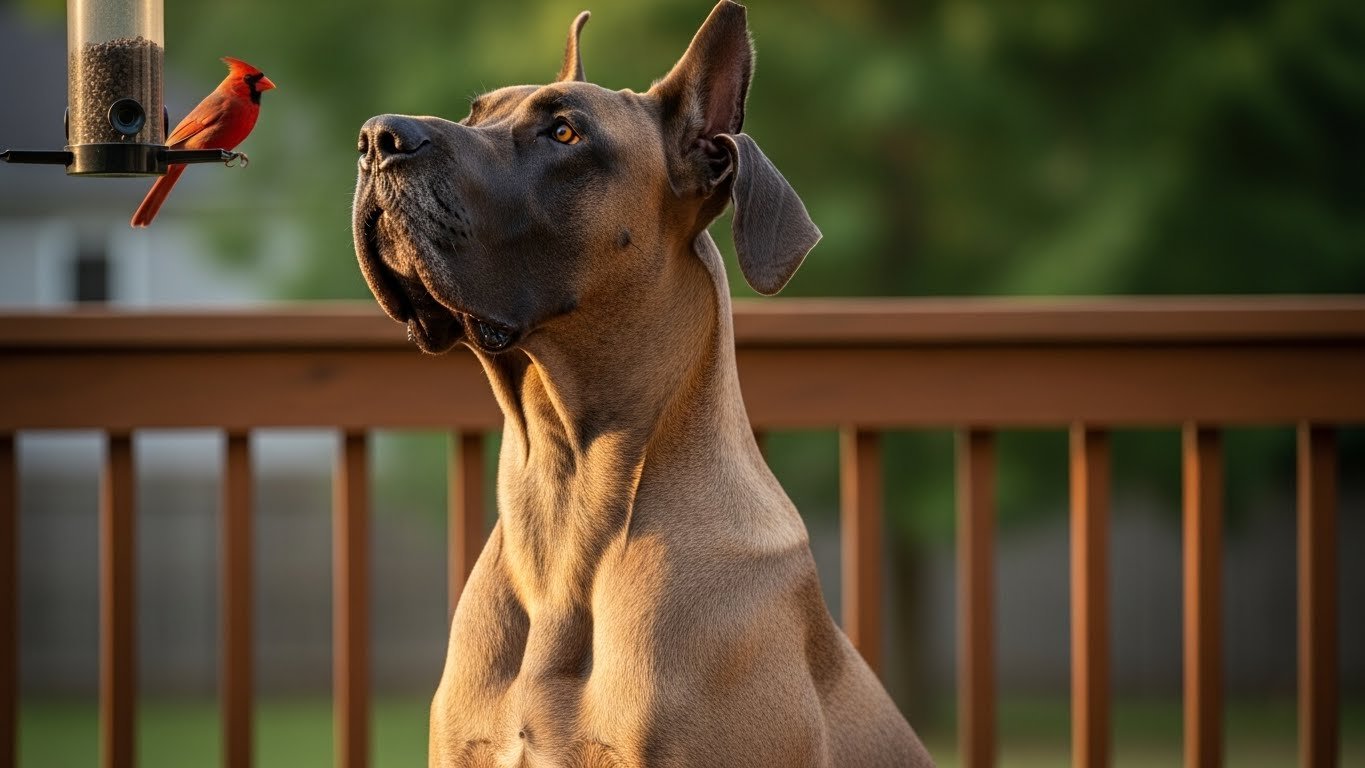
She put this bird feeder thing outside the window, and honestly? Game changer. Now, instead of deciding that the couch pillows are my enemies and need to be destroyed, I watch the Bird Channel.
It’s got drama, action, and suspense, will the cardinal share with the blue jay? Spoiler alert: he won’t.
My human seems pretty happy about this arrangement, too, probably because she’s tired of buying new pillows. Win-win, if you ask me. I think this new hobby also helps me practice mindfulness techniques, which is a great way to enjoy the moment and enhance my overall happiness.
Natural Hunting Instincts Activated
My Ancestors Were Actually Cool
Look, my great-great-great-however-many-greats-grandparents weren’t just lying around on fancy pillows all day. They were out there chasing wild boars through forests in Europe.
Which honestly sounds exhausting, but also impressive.
Now I chase birds through a window. So that’s where we ended up.
When a bird flies by, something just happens in my brain. It’s like when your phone automatically updates an app you forgot you had. The system’s old, but it still works.
Do I need to chase that sparrow? No. Am I gonna stop watching it? Also no.
What’s Going On In My Giant Head
Here’s the thing and I’ve thought about this a lot, mostly while staring at birds:
- Something moves, my brain goes “OH BOY WE’RE DOING THIS.”
- I automatically do that stalking crouch thing, which probably looks ridiculous given my size
- I get all excited, which apparently counts as exercise for my brain
I’m not even really choosing to watch these birds. My ancestors programmed this into me before I was born.
Before my mom was born. Before anybody thought, “let’s make a dog the size of a small horse.”
The bird shows up, and I’m just running software from like 1842.
Visual Tracking Exercises
Every time a cardinal lands on the fence, my brain gets a workout I definitely didn’t sign up for.
My visual tracking kicks in automatically. The bird moves left. My eyes follow. It hops right. I’m right there with it. This isn’t me being lazy. This is what us Great Danes call “professional wildlife observation.”
| What I Track | What It Does To Me |
|---|---|
| Sparrow flight path | My whole brain lights up like a Christmas tree |
| Crow landing | Makes me feel pretty smart for about three seconds |
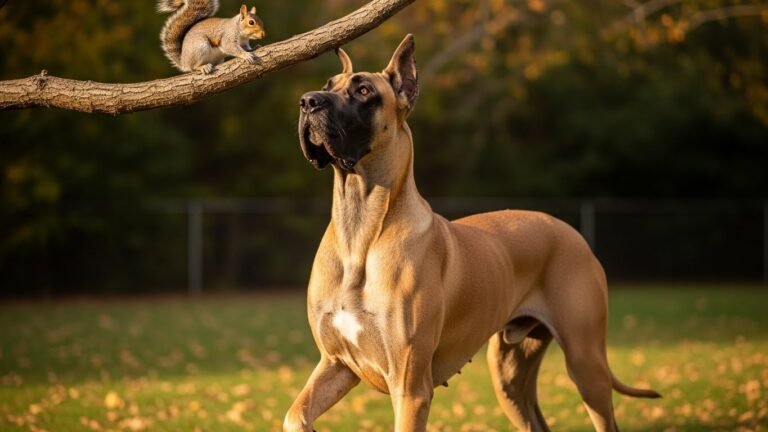
| Squirrel cameo | Honestly, I have no idea what’s happening anymore |
| Nothing moving | The day is completely ruined |
The mental exercise is no joke. Each bird is basically a mystery my brain won’t let go of. Where’s it heading? When’s it gonna take off? Will it come back? These are the big questions that take up most of my afternoon.
I’ve never actually caught a single one. But hey, at least I’m keeping my mind in shape.
Preventing Boredom and Anxiety
When the backyard goes quiet, things get weird in my head fast. I start eyeing the couch cushions. The shoes look chewable. My anxiety creeps up like an unwanted guest.
Then a cardinal lands on the fence.
Birds are my free therapy for boredom prevention. They dart, they hop, they do inexplicable bird things. My brain locks in. The cushions survive another day.
Here’s what watching birds does for anxiety reduction:
- Forces my brain to focus on something outside my own skull
- Gives me a job that requires zero destruction
- Tires my mind without requiring me to move my massive body
It’s simple. Birds move. I watch. Everyone’s furniture stays intact.
Understanding the Role of Movement in Triggering Your Dog’s Attention
Listen, I’m gonna let you in on a little secret about us dogs: movement is basically our kryptonite. I can stare at a squirrel sitting on a fence post all morning like it’s part of the furniture, but the nanosecond that little guy flicks his tail? Game over. I turn into one of those lawn statues, except I’m vibrating with pure focus. It’s embarrassing how predictable I am, honestly.
Here’s the thing: my great-great-great-times-a-million grandparents had to chase down dinner to survive, and apparently, nobody told my brain that Purina exists now. That old software is still running in here, whether I need it or not.
And birds? Oh man, birds are like the ultimate loading screen for my attention. They take off, they land, they hop around all weird—it’s constant entertainment I didn’t ask for but can’t look away from. Sniffing as a form of communication helps me gauge the excitement around me, especially when those feathered friends are flitting about.
I’ve got toys scattered all over the backyard that I supposedly love. But put a bird out there doing his little hoppy dance across the grass, and those toys might as well be invisible. Movement beats everything. Every. Single. Time.
I don’t make the rules—my ancestors did, and they really didn’t think this whole domestication thing through.
Why Your Great Dane’s Gentle Nature Doesn’t Diminish Their Hunting Drive
So yeah, my prey drive runs hot—but here’s where things get confusing for people who meet me. I’m a 150-pound couch potato who lets toddlers use my head as a drum. People call us gentle giants, and honestly? They’re totally right.
But here’s the thing nobody tells you: gentle doesn’t mean all those hunting instincts just packed their bags and moved to Florida.
Here’s what’s actually going on:
- Watching something isn’t the same as chasing it
- Being interested doesn’t mean I’m gonna tackle it
- Having an instinct and actually doing something about it are entirely different things
I can be both the dog who won’t hurt a fly AND the dog who tracks every single bird in the backyard like I’m getting paid for it.
It’s like how my owner says he’s on a diet but still watches cooking shows. These things can happen at the same time. My great-great-great-grandparents hunted wild boar. I hunt the perfect napping spot on the living room floor. That’s just how evolution works, I guess. And while I may enjoy a good birdwatching session, my gentle nature is supported by oxytocin, which strengthens my bond with my humans.
Ways to Encourage Safe Bird-Watching Activities for Your Great Dane
Because I’m gonna watch birds whether my owner approves or not, they decided to make it official.
Now we have designated bird-watching safety zones. There’s a cushioned spot by the window that’s honestly pretty nice. A shaded area in the yard with clear sightlines. They even put up a bird feeder at the perfect distance for me to see everything.
I didn’t really ask for all this, but like, I’m not gonna say no to a cushion.
Positive reinforcement is a thing now, too. I sit there calmly, and I get treats. I don’t slam into the glass like an idiot, more treats. It’s pretty straightforward.
The birds eat their seeds. I get to keep my dignity while writing down everything they do in my head. Everybody wins.
My owner calls it “enrichment.” I call it Tuesday afternoon. But whatever we’re calling it, I’ve got myself a solid surveillance setup going, and nobody’s mad about it.
Which is nice because I’m 150 pounds and that window’s not getting any stronger. Engaging in activities like bird-watching provides mental stimulation, contributing to my overall happiness and well-being.
Final Thoughts
So there you have it. Me, Yeti, all 150 pounds of pure athletic potential, capable of hitting 30 miles per hour if I really wanted to, and I’m choosing to spend my afternoon completely frozen, staring at a sparrow. Scientists say dogs like me can watch moving stuff for up to 30 minutes straight without getting bored. I mean, what can I say? We all need something to do. Mine involves being the size of a full-grown human while acting like a cat watching YouTube videos. Except the videos are real, and they’re happening in my backyard. It’s honestly a pretty good setup.